
Chakri dynasty
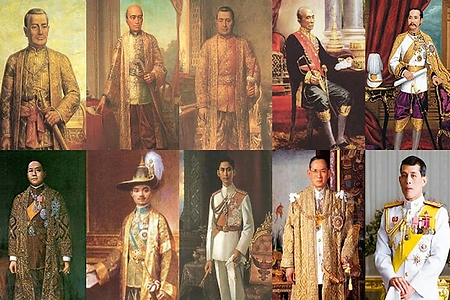
Thai Monarchy
The name "Chakri," which fuses "chakra" (discus) and "ri" (wield), reflects the monarch's role as the divine protector of the realm, embodying Vishnu himself. This dynastic nomenclature and spiritual foundation illustrates how deeply intertwined Thailand's monarchy is with Brahminical Hindu traditions, while being Buddhist.
Before becoming king, Phutthayotfa Chulalok (birthname Thongduang), served as the Chakri, or Chief Minister, under King Taksin of Thonburi. When he ascended the throne in 1782, later to be referenced as King Rama I, he established a new royal house and chose the name Chakri Dynasty to reflect both his previous position and the symbolic association with Vishnu’s discus.
The title 'Rama' along with a numerical designation, was only formalized in the early 20th century to align with Western diplomatic conventions in reference to Thai monarchs. The title 'Rama' is taken from the Indian epic Ramayana, where Rama is symbolized as a righteous king.
Before ascending the throne in 1782, Thong Duang (later known as King Rama I), held the high-ranking noble title of Chao Phraya Chakri. This title was historically reserved for the Chief Minister of Civil Administration who governed the northern provinces of Siam. When he replaced King Taksin as the new monarch, he adopted 'Chakri' as the name of his royal house. It transitioned a functional administrative title to a hereditary dynastic name, providing a sense of continuity between his leadership as a general and his new role as sovereign.
The name Chakri carries a profound dual significance rooted in both ancient Sanskrit etymology and the personal history of King Rama I. Linguistically, the term combines the words Chakra (the celestial discus of Lord Vishnu) and Tri (the trident of Lord Shiva), representing the combined divine power and protection of these supreme deities. Thai kingship had long incorporated the belief that the monarch is an incarnation of Phra Narai (the Thai name for Vishnu). This union symbolized the strength and stability of the kingdom after the fall of Ayutthaya, with King Rama I reinforcing his role as the “Preserver” of the kingdom.
Complementing this divine imagery is the Buddhist ideal of the Chakravartin, or 'Wheel-Turner'. This term describes a ruler who governs with three essential pillars - Dhamma, or ruling through righteousness and moral law; the possession of the Seven Gems, which are symbolic treasures such as the Wheel, the Elephant, and the Treasurer that represent the functional perfection of his state; and the maintenance of Universal Peace, ensuring a realm free from crime and conflict. By embodying these qualities, the early Chakri kings signaled that their reign was not merely a political succession, but the dawn of a Siamese Renaissance.