
Silom
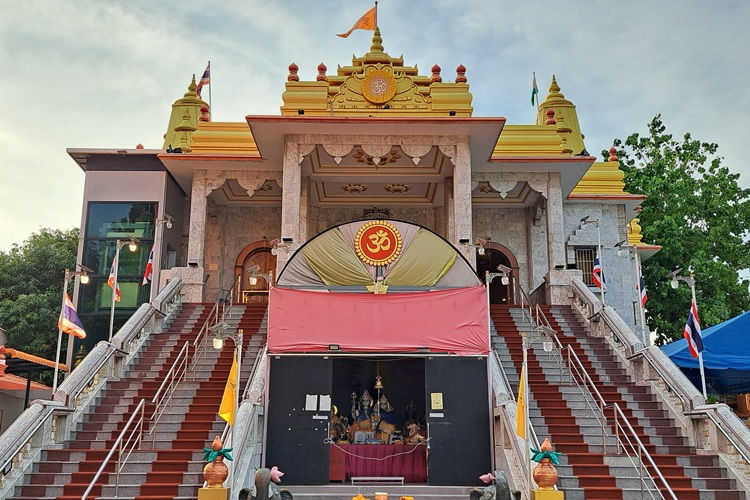


Maha Mariamman Temple
Built in 1879 by Tamil immigrants, this Bangkok’s most prominent Hindu temple. The entrance features a 6-meter-high gopura (tower) richly decorated with intricate carvings of various Hindu deities in diverse shapes and sizes. The temple’s main shrine, crowned with a gilded copper-plated dome, is dedicated to Goddess Mariamman, a South Indian deity. Within the complex are two additional shrines dedicated to Ganesh and Kartikeya, which devotees visit in a set order: Ganesh, Kartik, then Mariamman. The temple hall is adorned with bronze statues of many Hindu gods including Shiva, Krishna, Vishnu, Lakshmi, Kali, Saraswati, and Nataraja with Shivakami, among others. There are also smaller shrines devoted to deities like Shiva Lingam, Brahma, Navagraha, Aiyanar, Saptha Kanni, Periyachi, Madurai Veeran, and Kathavarayan, reflecting the temple's religious significance.
Vishnu Temple
Completed in 1920, the Vishnu Temple in Bangkok’s Yannawa district was established by the local Hindu community, particularly migrants from Uttar Pradesh, India. Built in a northern Indian architectural style, the temple features intricate marble statues imported from Jaipur and is primarily dedicated to Lord Vishnu (Narayana). The temple houses around 24 Hindu deities, including Brahma, Shiva, Ganesh, Hanuman, Sita and Rama, Krishna, Lakshmi, Parvati, Saraswati, and even Lord Buddha, each revered by worshippers.
BAPS Swami Narayanan Temple
Established by the global BAPS Swaminarayan Sanstha, the mandir serves as a vital spiritual and cultural anchor for Bangkok’s Indian diaspora and local devotees. This sanctuary is rooted strictly in the Akshar-Purushottam Darshan tradition of Vaishnavism. Enshrining sacred murtis (consecrated images) of Bhagwan Swaminarayan and Akshar-Purushottam Maharaj, the complex functions as an active center for daily darshan, aarti light rituals, and community satsang assemblies. It stands as a vibrant testament to modern Indian devotional life (bhakti) and community service (seva), showcasing how authentic Indian Hindu customs thrive alongside Bangkok's rich heritage.
Jewellery Trade Centre
Standing tall on Silom Road, the 59-story Jewellery Trade Center (JTC) serves as the nerve center of Thailand's global gemstone industry, an ecosystem profoundly shaped and driven by Bangkok's Indian business community. Indian gem merchants from Gujarati, Marwari, Jain, Punjabi, and South Indian trading lineages form the backbone of JTC's wholesale trading floors and corporate office suites. Leveraging deep-rooted family networks spanning Jaipur, Surat, Mumbai, and East Africa, these Indian enterprise families helped turn JTC into one of the world's premier trading hubs for colored gemstones (particularly rubies and sapphires) and polished diamonds. From raw rough-stone sourcing and precision lapidary work to high-stakes international brokerage, Indian traders not only anchor JTC's daily commerce but have been instrumental in elevating Thailand into a multi-billion-dollar global jewelry export capital.
Bang Rak
Stretching along the Chao Phraya River and encompassing the iconic Silom corridor, Bang Rak developed into Bangkok’s historic commercial engine largely through the pioneering efforts of South Asian traders starting in the mid-19th century. Migrating during the reigns of Kings Rama IV and Rama V as the city paved its first roads, Indian merchants—including Tamil Hindus, Punjabi Sikhs, Sindhis, and Indian Muslims—established foundational trade networks in Bang Rak, dominating the district's textile import-export, custom tailoring, shipping, and spice trades.